
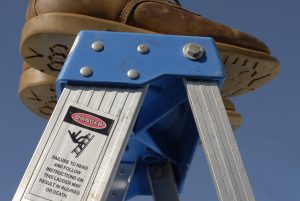
A ladder fall can happen in seconds — but the injuries, medical bills, and lost income can last a lifetime. Whether you fell from an A-frame ladder on a construction site, an extension ladder while doing building maintenance, or a folding ladder that collapsed on the job, New York law gives injured workers powerful tools to recover full and fair compensation, often beyond what workers’ compensation alone provides.
For more than 45 years, Hill & Moin LLP has represented ladder fall victims across New York City and the surrounding counties, recovering millions of dollars in verdicts and settlements, including a $13 million result for a worker who fell from a ladder and a $3.5 million settlement for a plumber injured in a ladder fall. Our attorneys understand the interplay between New York Labor Law, OSHA regulations, and workers’ compensation rules — and we use that knowledge to build cases that hold negligent property owners, contractors, and equipment manufacturers accountable.
If you or a loved one was hurt in a ladder accident, call (212) 668-6000 for a free, no-obligation consultation. There is no fee unless we win.
Ladder Falls Are a Persistent and Preventable Danger in New York
Falls remain the single leading cause of death in the construction industry, and ladders are consistently one of the top sources of those falls, alongside roofs and scaffolds. Recent federal data underscores just how serious the problem continues to be:
- The U.S. Bureau of Labor Statistics’ 2024 Census of Fatal Occupational Injuries recorded 1,034 construction worker deaths nationwide, with 389 of those deaths caused by falls, slips, and trips — nearly 38% of all construction fatalities. Of those falls, 95.9% were falls to a lower level, the category that includes ladder falls.
- Construction accounted for nearly half of all fatal falls, slips, and trips across every private industry in the United States in 2024.
- OSHA’s “Fatal Four” — falls, struck-by incidents, electrocutions, and caught-in/between hazards — continue to account for more than half of all construction worker deaths, with falls alone responsible for roughly a third of the total.
- Fall protection violations have been OSHA’s most frequently cited safety violation for over a decade, reflecting how often ladders, scaffolds, and elevated work surfaces are left unsecured or improperly used on active job sites.
- The Center for Construction Research and Training (CPWR), drawing on BLS data, has repeatedly identified ladders as one of the three leading equipment-related sources of fatal construction falls, alongside roofs and scaffolding.
These numbers aren’t abstractions. Behind every statistic is a worker — often a laborer, painter, electrician, window cleaner, or maintenance employee — whose life was upended because a ladder wasn’t secured, wasn’t inspected, or wasn’t the right equipment for the job. If this happened to you, an experienced construction accident lawyer can help you understand exactly what went wrong and who is legally responsible.
New York Labor Law §§ 240(1) and 241(6): Why Ladder Falls Are Different in New York
New York is one of the few states with statutes specifically designed to protect workers from elevation-related hazards like ladder falls. These laws are often more powerful than a standard negligence claim, and they are central to almost every ladder accident case Hill & Moin handles.
Labor Law § 240(1) — The “Scaffold Law”
Labor Law § 240(1), often called the Scaffold Law, imposes absolute liability on property owners and general contractors when a worker is injured due to an elevation-related hazard and the proper safety devices — including ladders — were not provided, were defective, or failed to do their job. Unlike an ordinary negligence claim, a worker does not need to prove the owner or contractor was careless in the traditional sense. If the ladder shifted, wobbled, collapsed, or wasn’t secured, and that failure caused the fall, liability generally attaches regardless of comparative fault.
Section 240(1) applies to workers engaged in:
- Construction, demolition, or excavation
- Repair or alteration of a building or structure
- Painting or cleaning of a building or structure
- Pointing work on a building or structure
Importantly, § 240(1) claims can be brought even if the injured worker’s own employer isn’t the party being sued — property owners and general contractors can be held liable even if they didn’t directly supervise the ladder work.
Labor Law § 241(6) — Safe Workplace Requirements
Labor Law § 241(6) requires owners and contractors to comply with specific safety rules set out in the New York Industrial Code (12 NYCRR Part 23), which contains detailed regulations for ladder use, placement, and maintenance on construction sites. Unlike § 240(1), a § 241(6) claim requires the injured worker to identify a specific Industrial Code violation and does allow for a comparative negligence defense — meaning the jury can consider whether the worker’s own conduct contributed to the accident. Still, it provides an important and often overlapping avenue for recovery, especially in cases where § 240(1) may not squarely apply.
A knowledgeable Labor Law attorney will evaluate your accident under both statutes, since many ladder fall cases support claims under §§ 240(1) and 241(6) simultaneously, along with common-law negligence.
Common Causes of Ladder Accidents
Ladder falls rarely happen “by accident” in the truest sense — they’re almost always traceable to a specific, preventable failure. Common causes we investigate include:
- Unsecured or unbraced ladders that shift, slide, or tip during use
- Improper ladder angle or placement, including setups on uneven, wet, or cluttered surfaces
- Missing or broken rungs, rails, or locking mechanisms
- Using the wrong type or size of ladder for the job (for example, a step ladder used for overhead work requiring an extension ladder)
- Overloading the ladder beyond its rated weight capacity
- Lack of ladder safety training or failure to enforce basic safety protocols
- Ladders positioned near overhead power lines or in high-traffic pathways
- Another worker or object striking the ladder, causing the climber to fall
- Failure to inspect ladders before use, allowing damaged equipment to remain in service
- Rushed work schedules that pressure workers to skip safety steps
Identifying the precise cause of your fall is critical, because it often points directly to who is legally responsible — a general contractor who failed to enforce site safety, a subcontractor who provided defective equipment, or a manufacturer whose product failed.
OSHA Ladder Safety Requirements
Federal OSHA standards (primarily 29 CFR 1926.1053 for construction) set detailed, non-negotiable requirements for ladder use on the job. Employers are generally required to:
- Ensure ladders can support at least four times the maximum intended load
- Inspect ladders for damage before each work shift and remove defective ladders from service immediately
- Secure or tie off ladders to prevent displacement, and maintain the proper 4:1 setup angle for extension ladders
- Extend the top of a straight or extension ladder at least three feet above the landing surface
- Keep the area around the top and bottom of the ladder clear of debris, tools, and materials
- Train workers on proper ladder selection, setup, use, and inspection under OSHA’s ladder safety training requirements
- Prohibit the use of the top step or top cap of stepladders and prohibit using the top two rungs of a straight/extension ladder unless designed for that purpose
- Never allow more than one worker on a ladder at a time unless the ladder is designed for multiple users
When these requirements are ignored, workers pay the price. A documented OSHA violation following a ladder accident can be powerful evidence in both a Labor Law claim and, where applicable, a product liability or third-party claim.
Defective Ladders and Equipment Failures
Not every ladder accident is caused by misuse or a safety violation on site — sometimes the ladder itself is the problem. Manufacturing defects, design flaws, and inadequate warnings can all make a ladder unreasonably dangerous even when it’s used exactly as intended. Common defect-related failures include:
- Cracked, warped, or corroded rails and rungs
- Faulty locking mechanisms or spreader bars that fail under normal use
- Substandard materials that cannot bear the ladder’s rated load
- Missing or inadequate non-slip feet
- Inadequate warning labels regarding weight limits or proper use
When a defective ladder causes a fall, an injured worker may have a product liability claim against the manufacturer, distributor, or retailer — separate from, and in addition to, any Labor Law claim against the property owner or contractor. These cases typically require preserving the ladder itself and retaining an engineering expert to examine it before it is lost, repaired, or discarded.
Third-Party Liability in Ladder Accident Claims
Because a construction or maintenance site typically involves multiple contractors, subcontractors, and equipment suppliers, ladder accident cases frequently involve more than one potentially liable party. Depending on the facts, a third-party claim may be brought against:
- The property owner, who has non-delegable duties under Labor Law § 240(1)
- The general contractor, who is responsible for overall site safety
- A subcontractor who provided or set up the defective or unsecured ladder
- An equipment rental company that supplied a damaged or improperly maintained ladder
- The ladder manufacturer or distributor, in cases involving product defects
- Another worker or third party whose negligence caused the ladder to shift or tip
Identifying every potentially responsible party matters because it can significantly affect the total compensation available, especially when your own employer is protected from a direct lawsuit by the workers’ compensation system.
Workers’ Compensation vs. Personal Injury Lawsuits: What’s the Difference?
Most workers injured on the job assume workers’ compensation is their only option. In reality, injured workers in New York frequently have two separate — and often complementary — paths to recovery.
Workers’ Compensation provides no-fault benefits regardless of who caused the accident, covering a portion of lost wages and medical expenses. However, it generally does not compensate you for pain and suffering, and wage benefits are typically capped well below your actual earnings. In most cases, workers’ compensation is your exclusive remedy against your own employer.
A Labor Law / Personal Injury Lawsuit, by contrast, can be filed against a negligent party other than your direct employer — such as the property owner, general contractor, subcontractor, or equipment manufacturer — under Labor Law §§ 240(1), 241(6), or ordinary negligence principles. Unlike workers’ compensation, a personal injury lawsuit allows recovery for the full scope of your damages, including pain and suffering, full lost earnings (past and future), and loss of enjoyment of life.
Many of our clients pursue both simultaneously: workers’ compensation benefits to cover immediate medical costs and partial wage replacement, and a third-party Labor Law lawsuit to recover full compensation for the harm they’ve suffered. Our workers’ compensation attorneys can help you navigate both systems at once, ensuring one claim doesn’t jeopardize the other.
Evidence Needed to Prove a Ladder Accident Claim
Ladder accident cases are won or lost on evidence, much of which can disappear quickly if it isn’t preserved. A strong claim typically includes:
- The ladder itself — preserved in its post-accident condition, ideally before it is repaired, discarded, or returned to a rental company
- Photographs and video of the ladder, the accident scene, and any visible defects, taken as soon as possible after the fall
- Witness statements from coworkers or bystanders who saw the accident or the ladder’s condition beforehand
- OSHA inspection reports and citations, if a violation was identified following the accident
- Site safety logs, inspection records, and toolbox talk documentation
- Medical records documenting the injury, treatment, and prognosis
- Employment and wage records to establish lost income
- Expert engineering analysis, particularly in cases involving a suspected defect or Industrial Code violation
- Accident reports filed with the employer, property owner, or general contractor
Because evidence like a damaged ladder or a security camera recording can be lost, damaged, or overwritten within days, it is critical to contact an attorney as soon as possible after your accident so a proper investigation and evidence preservation letter can begin immediately.
Compensation Available After a Ladder Accident
The compensation available in a New York ladder accident case depends on whether you pursue a workers’ compensation claim, a third-party Labor Law lawsuit, or both. Depending on the facts of your case, recoverable damages may include:
- Past and future medical expenses, including surgery, rehabilitation, and long-term care
- Past and future lost wages and diminished earning capacity
- Pain and suffering and loss of enjoyment of life (available only in a personal injury/Labor Law claim, not workers’ compensation)
- Permanent disability or disfigurement
- Costs of home modifications or assistive equipment for permanent injuries
- Loss of consortium for spouses in appropriate cases
- Wrongful death damages for surviving family members, where a ladder fall proves fatal
Ladder falls frequently cause serious injuries such as fractures, spinal cord damage, and traumatic brain injuries, given the heights and hard surfaces involved. If you or a loved one suffered a traumatic brain injury or a spinal injury in a fall, the long-term costs of care can be substantial, and it’s essential to work with attorneys who understand how to value these damages accurately — not just for today, but for the years ahead. In the most tragic cases, families may also need to consider a wrongful death claim.
Steps to Take Immediately After a Ladder Accident
What you do in the hours and days after a ladder fall can significantly affect your health and your legal claim. If you’re able to, take the following steps:
- Get medical attention right away, even if you feel your injuries are minor. Some injuries, especially head and spinal injuries, aren’t immediately obvious.
- Report the accident to your supervisor or employer and request a written incident report.
- Photograph the ladder, the accident scene, and your injuries before conditions change or equipment is moved.
- Preserve the ladder if possible, and note its brand, model, and any visible damage.
- Get the names and contact information of witnesses, including coworkers and anyone else on site.
- Avoid giving recorded statements to an insurance company or your employer’s workers’ compensation carrier without first speaking to an attorney.
- File a workers’ compensation claim within the required time frame to protect your right to benefits.
- Contact an experienced New York ladder accident lawyer as soon as possible so evidence can be preserved and your rights protected under both the workers’ compensation system and Labor Law.
Why Choose Hill & Moin LLP for Your Ladder Accident Case
Hill & Moin LLP has represented injured New Yorkers for more than 45 years, with a track record that includes over $400 million recovered for our clients. Our results in elevation-related and construction cases include a $13 million recovery for a worker who fell from a ladder, a $3.5 million settlement for a plumber injured in a ladder fall, a $3.5 million recovery for a window cleaner’s fall, and a $1.125 million settlement for a laborer who fell from a ladder during a renovation project.
Our attorneys are fluent in the Labor Law statutes that govern New York construction sites, the OSHA and Industrial Code requirements that establish the safety standards owners and contractors must follow, and the workers’ compensation system that runs alongside every workplace injury claim. We work with medical experts, engineering consultants, and accident reconstruction specialists to build the strongest possible case, and we are fluent in Spanish, Russian, French, Yiddish, and Ukrainian to serve New York’s diverse workforce.
We also regularly handle related workplace injury matters, including scaffolding accidents and other construction accident claims, giving our clients a single, experienced team that understands every angle of a New York job-site injury.
We work on a contingency-fee basis: there is no fee unless we win your case.
Frequently Asked Questions
- Who can be held liable for a ladder accident on a New York construction site? Depending on the facts, liability may fall on the property owner, general contractor, a subcontractor, an equipment rental company, or a ladder manufacturer. New York Labor Law § 240(1) places responsibility on property owners and general contractors for elevation-related hazards, even if they didn’t personally supervise the ladder work.
- Can I sue if my employer provided the ladder that caused my fall? In most cases, you cannot sue your own employer directly because workers’ compensation is typically your exclusive remedy against them. However, you may still be able to bring a Labor Law claim against the property owner, general contractor, or another third party, in addition to collecting workers’ compensation benefits.
- What is the difference between Labor Law § 240(1) and § 241(6)? Section 240(1) imposes strict liability on owners and contractors for elevation-related hazards like unsecured ladders, without regard to the worker’s own conduct. Section 241(6) requires proof of a specific Industrial Code violation and allows the defense to argue comparative negligence, meaning your own conduct could reduce (but not necessarily eliminate) your recovery.
- How long do I have to file a ladder accident claim in New York? Personal injury and Labor Law lawsuits generally must be filed within three years of the accident, though claims against government entities carry much shorter notice deadlines. Workers’ compensation claims have their own, often shorter, filing requirements. Because deadlines vary based on the parties involved, it’s important to speak with an attorney as soon as possible.
- What if the ladder was defective rather than misused? If a manufacturing defect, design flaw, or inadequate warning caused or contributed to your fall, you may have a product liability claim against the ladder’s manufacturer or distributor, separate from any claim against the property owner or contractor.
- Will filing a lawsuit affect my workers’ compensation benefits? Filing a third-party Labor Law lawsuit does not eliminate your workers’ compensation benefits, but the two systems interact in specific ways, including potential liens on a lawsuit settlement. An attorney experienced in both systems can help you maximize your total recovery while protecting your ongoing benefits.
- How much is my ladder accident case worth? There is no set value — compensation depends on the severity of your injuries, lost income, long-term medical needs, and which parties can be held liable. Cases involving fractures, spinal injuries, or traumatic brain injuries typically carry higher value due to long-term care costs and lost earning capacity.
Injured in a Ladder Fall? Call Hill & Moin LLP Today
You don’t have to face the insurance companies, your employer, or a negligent contractor alone. Hill & Moin LLP has spent over four decades fighting for injured New York workers, and we’re ready to put that experience to work for you. Evidence from a ladder accident can disappear fast — the sooner you call, the sooner we can start protecting your case.
Call (212) 668-6000 now for a free, 24/7 consultation. There is no fee unless we win.