)
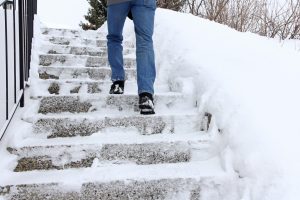
Every New York winter brings the same predictable hazard: snow that isn’t shoveled, ice that isn’t salted, and sidewalks, steps, and parking lots that turn into serious injury risks for anyone walking across them. Snow and ice accident cases are also some of the most heavily litigated premises liability claims in New York, because the law includes specific rules — like the “storm in progress” doctrine and strict removal deadlines — that most injured people have never heard of, and that insurance companies use aggressively to deny valid claims.
For more than 45 years, Hill & Moin LLP has represented victims of snow and ice accidents across New York City, recovering significant settlements, including $2 million for a pedestrian who slipped and fell on an icy sidewalk, $1.9 million for a construction worker who slipped on snow at a job site, and $500,000 for a home health aide who broke her ankle and injured her neck and back after slipping on unsalted ice the day after a snowstorm. We know how to prove exactly when a storm ended, when the property owner’s legal clock started running, and why the ice that caused your fall wasn’t simply “an act of nature.”
If you or a loved one was injured in a snow or ice accident, call (212) 668-6000 for a free, 24/7 consultation. There is no fee unless we win.
Snow and Ice Falls Remain a Major, Recurring Source of Injury
Winter weather turns an already common hazard — slip and fall accidents — into one of the most frequent causes of serious injury each year.
- The National Safety Council reports that 48,308 people died in falls at home and at work in 2024, accounting for roughly 24% of all preventable injury-related deaths nationwide, and falls remain the third leading cause of unintentional injury death in the United States according to NSC data.
- The CDC reports that slip and fall injuries send more than 1 million people to emergency rooms every year nationwide, and industry analyses tracking CDC and National Safety Council data have found that snow and ice conditions contribute to roughly 30% of all slip and fall injuries, with icy surfaces identified as a primary culprit.
- The CDC has also found that falls send over 800,000 people to the hospital annually for injuries such as hip fractures and head injuries, and that more than 95% of hip fractures result from a fall, most often a sideways fall — exactly the mechanism common in ice-related slips.
- CDC and NOAA data consistently show that winter weather contributes to more fatalities annually than summer heat, a reminder that cold-weather hazards, including falls on ice, are a serious and ongoing public safety concern, not just an inconvenience.
- With roughly 12,750 miles of sidewalk and thousands of parking lots, stairways, and building entrances across the five boroughs, even a modest citywide snow removal failure rate translates into a significant number of preventable injuries every winter.
Behind these numbers are commuters, delivery workers, home health aides, shoppers, and residents who trusted that the property they were walking across had been properly cleared — and were badly hurt because it wasn’t. An experienced premises liability lawyer can help you determine exactly who failed in their legal duty to keep that property safe.
Common Causes of New York Snow and Ice Accidents
Snow and ice accidents are almost always traceable to a specific maintenance failure or hazardous condition that a property owner knew about, or should have known about, and failed to address. Common causes we investigate include:
- Untreated or unshoveled sidewalks, left hazardous well beyond the legally required clearing window
- Icy parking lots, particularly in commercial lots where vehicle traffic compacts snow into hardened, slippery ice
- Frozen or poorly maintained stairways, including building entrances, fire escapes, and interior stairwells exposed to melting and refreezing snow
- Black ice, a thin, often invisible layer of ice that commonly forms on bridges, overpasses, shaded areas, low-lying spots, and building entrances where runoff refreezes overnight
- Inadequate or incomplete snow removal, including snow pushed into piles that later melt and refreeze across a walking path
- Poor drainage that creates refreezing hazards, where water from melting snow, gutters, or downspouts pools and refreezes on sidewalks, steps, or parking areas — a recurring, foreseeable hazard that owners are expected to address
- Failure to apply salt, sand, or other de-icing material to areas where hard-frozen ice cannot be safely removed
- Violations of New York’s property maintenance obligations, including failing to meet legally mandated removal timeframes or ignoring a known recurring icy condition
Who May Be Liable for a Snow or Ice Accident?
Snow and ice accident cases often involve identifying which of several potentially responsible parties failed to meet their legal obligations. Depending on the facts, liability may fall on:
- Commercial property owners, who are responsible for keeping customer- and employee-facing walkways, entrances, and parking lots reasonably safe
- Residential landlords and multi-family building owners, who share a similar duty for building entrances, common areas, and adjacent sidewalks
- Business owners and tenants, who may bear responsibility for areas under their control, such as a storefront entrance or leased parking area
- Municipalities, in cases involving city-owned property, though claims against a government entity carry unique and much shorter notice requirements
- Snow removal contractors, hired to plow, shovel, or salt a property, who can be held liable for negligent or incomplete snow removal work
- Property management companies, responsible for coordinating and overseeing snow removal efforts on behalf of an owner
Because responsibility for snow and ice removal is often contracted out, it’s common for a property owner to point to a snow removal company, and for that company to argue the owner never properly authorized the necessary work. Identifying every responsible party — and the contracts between them — is often essential to building a successful claim.
New York’s “Storm in Progress” Doctrine
One of the most important — and most misunderstood — legal principles in New York snow and ice cases is the “storm in progress” doctrine. Under this rule, a property owner generally has no legal obligation to clear snow or ice while a storm is still actively occurring, since New York courts have long recognized that requiring continuous clearing during an ongoing storm would be unreasonable and often unsafe.
In New York City, this principle is reinforced by NYC Administrative Code § 16-123, which gives property owners a specific grace period after a storm ends:
- Owners generally have four hours after snow or ice stops falling to clear their sidewalks, excluding the hours between 9:00 p.m. and 7:00 a.m.
- If snow stops between 9:00 p.m. and 7:00 a.m., owners generally have until 11:00 a.m. to complete clearing.
- If ice is frozen so hard that removal would damage the pavement, owners may instead apply sand, salt, ashes, or a similar material within that same window, and must thoroughly clean the sidewalk once conditions allow.
- This duty works alongside NYC Administrative Code § 7-210, which places general sidewalk maintenance responsibility on abutting property owners (with an exception for owner-occupied one-, two-, or three-family homes).
Importantly, the storm in progress doctrine is not a blanket shield. If a fall occurs from snow or ice that accumulated from an earlier storm — rather than the storm currently in progress — or if the property owner created or worsened the hazardous condition (for example, through improper plowing that created an ice ridge), the doctrine may not apply, and liability can still attach. Proving exactly when a storm began and ended, and which storm’s precipitation caused a particular patch of ice, is often the central factual dispute in these cases — and one where expert weather analysis frequently makes the difference.
Evidence Needed to Prove a Snow or Ice Accident Claim
Snow and ice cases are often won or lost on timing — establishing exactly when a storm ended and how long the hazardous condition existed afterward. Strong claims are typically built on:
- Photographs and video of the ice, snow, or refrozen condition, taken as soon as possible after the fall
- Certified weather records, including precipitation start and stop times, which are often obtained from the National Weather Service to establish exactly when the property owner’s clearing window began
- Surveillance footage from nearby buildings or businesses, which may need to be preserved quickly through a formal request before it’s overwritten
- Snow removal contracts and service logs, showing whether, and when, a property was actually plowed, shoveled, or salted
- 311 complaint records and any prior reports of the same recurring icy condition
- Witness statements from bystanders, neighbors, or coworkers
- Medical records documenting the injury, treatment, and prognosis
- Expert meteorological and engineering analysis, particularly in cases involving disputed storm timing or a claim that improper drainage or plowing created the hazard
Because snow can be cleared and ice can melt within hours, prompt documentation — including photographs taken immediately after a fall — is often the single most valuable piece of evidence in these cases.
Comparative Negligence in Snow and Ice Accident Cases
New York applies a “pure comparative negligence” rule, meaning an injured person can still recover compensation even if they were partly at fault for their own fall, though their total recovery is reduced by their percentage of responsibility. Insurance companies frequently argue that a person should have seen the ice, was wearing inappropriate footwear, or chose an unnecessary path across a hazardous area. An experienced attorney can push back on these arguments, particularly in cases involving black ice, which by definition is difficult or impossible to see, and can help establish that the property owner’s failure to clear or treat the area — not the pedestrian’s conduct — was the true cause of the fall.
Notice of Claim Requirements When a Government Entity Is Involved
If your snow or ice accident occurred on city-owned property — including a public sidewalk exempted from § 7-210, a public building, a park, or a public housing development — special and much shorter deadlines apply:
- A Notice of Claim must generally be filed within 90 days of the accident under General Municipal Law § 50-e, far shorter than the standard three-year statute of limitations for private personal injury claims.
- Claims against a government entity for snow and ice conditions may also require establishing prior written notice of the specific hazardous condition, depending on the type of property involved.
- Missing the 90-day deadline, or naming the wrong government entity, can result in a claim being permanently barred, regardless of injury severity.
Because it isn’t always immediately clear whether a snow or ice accident occurred on private or government-owned property, it’s important to consult an attorney immediately so that all applicable notice deadlines are identified and met. Our municipal liability guidance covers additional detail on pursuing claims against city agencies.
Common Injuries from Snow and Ice Accidents
Because falls on ice often happen suddenly and without warning, victims frequently cannot brace themselves properly, leading to severe injuries, including:
- Fractures, especially of the hip, wrist, ankle, and arm
- Hip injuries, which are particularly common and particularly serious among older adults, frequently requiring surgery and extensive rehabilitation
- Traumatic brain injuries, including concussions and more severe closed head injuries from striking the pavement
- Spinal cord injuries, including herniated discs and, in severe cases, paralysis
- Soft tissue damage, including sprains, strains, and torn ligaments
- Shoulder and wrist injuries from instinctive attempts to break a fall
If you or a loved one suffered a traumatic brain injury or a spinal injury in a snow or ice accident, it’s essential to work with attorneys who understand how to fully value the long-term medical costs and lost earning capacity these injuries often involve.
Compensation Available After a Snow or Ice Accident
Depending on the severity of your injuries and the facts of your case, compensation in a New York snow or ice accident claim may include:
- Past and future medical expenses, including surgery and rehabilitation
- Past and future lost wages and diminished earning capacity
- Pain and suffering and loss of enjoyment of life
- Permanent disability, disfigurement, or scarring
- Costs of home modifications or assistive equipment for permanent injuries
- Wrongful death damages for surviving family members in fatal cases
Steps to Take Immediately After a Snow or Ice Accident
- Seek medical attention right away, even if injuries seem minor. Hip and head injuries in particular aren’t always immediately apparent.
- Photograph the hazard — the ice, snow, or refrozen condition — as soon as possible, since it can melt, be cleared, or be re-covered by new snowfall within hours.
- Note the time and date, and if possible, note recent weather conditions, since establishing exactly when a storm ended is often central to these cases.
- Report the accident to the property owner, landlord, or business, and request a written incident report.
- Get contact information for witnesses.
- Preserve your clothing and footwear worn at the time of the fall.
- Avoid giving a recorded statement to any insurance company before speaking with an attorney.
- Contact an experienced New York snow and ice accident lawyer immediately, since weather evidence and surveillance footage disappear quickly, and government notice deadlines can be as short as 90 days.
Why Choose Hill & Moin LLP for Your Snow or Ice Accident Case
Hill & Moin LLP has spent more than 45 years fighting for injured New Yorkers, recovering over $400 million for our clients, including a $2 million settlement for a pedestrian who slipped on an icy sidewalk, a $1.9 million settlement for a construction worker who slipped on snow at a job site, and a $500,000 settlement for a Staten Island home health aide who broke her ankle after slipping on unsalted ice — a case where the property owner initially denied liability entirely. We understand the technical rules that make New York snow and ice cases uniquely complicated, from applying the storm in progress doctrine correctly to obtaining certified weather data and snow removal contracts before they disappear.
Our attorneys work with meteorological and engineering experts to establish exactly when a storm ended and why a property owner’s failure to act within the legally required window caused your injury, and we are fluent in Spanish, Russian, French, Yiddish, and Ukrainian to serve New York’s diverse communities. We handle every case on a contingency-fee basis: there is no fee unless we win.
We also regularly represent clients in related matters, including general slip and fall accidents, sidewalk accidents, stairway accidents, and broader premises liability claims, giving injured New Yorkers a single, experienced team no matter the season or the cause of their fall.
Frequently Asked Questions
Can a property owner be held liable if I fell while a storm was still happening? Generally, no. Under New York’s “storm in progress” doctrine, property owners are not required to clear snow or ice while a storm is actively occurring. However, if your fall involved snow or ice left over from an earlier storm, or if the owner’s own actions (such as improper plowing) created the hazard, liability may still apply.
How long does a property owner have to clear snow or ice in New York City? Under NYC Administrative Code § 16-123, property owners generally have four hours after snow or ice stops falling to clear their sidewalks, excluding the hours between 9:00 p.m. and 7:00 a.m. If snow stops during those overnight hours, owners generally have until 11:00 a.m. to clear it.
What if I fell on black ice that I couldn’t see? Black ice cases often turn on whether the property owner knew, or should have known, about a recurring icy condition — for example, from poor drainage or a known problem area — and failed to address it. The fact that black ice is hard to see can also help counter arguments that you should have simply avoided the hazard.
Who is responsible if a snow removal contractor, not the property owner, caused my fall? Snow removal companies can be held liable for negligent or incomplete plowing, shoveling, or salting work. In many cases, both the property owner and the snow removal contractor may share responsibility, depending on the terms of their service agreement.
Can I still recover compensation if I was partly at fault for my fall? Yes. New York’s pure comparative negligence rule allows recovery even if you were partially at fault, though your total compensation will be reduced by your assigned percentage of responsibility.
What if my snow or ice accident happened on city-owned property? Claims involving government-owned property require a Notice of Claim, generally filed within 90 days of the accident, and may involve additional requirements such as proving the City had prior written notice of the specific hazard. Missing these deadlines can permanently bar your claim.
How long do I have to file a snow or ice accident lawsuit in New York? Claims against private property owners generally must be filed within three years of the accident. Claims potentially involving a government entity require a Notice of Claim within 90 days, so it’s important to consult an attorney as soon as possible.
Injured in a Snow or Ice Accident? Call Hill & Moin LLP Today
Winter weather is foreseeable, and New York law requires property owners to plan for it — not shrug off a fall as simply bad luck. Hill & Moin LLP has spent over four decades holding negligent property owners, landlords, and snow removal companies accountable for New Yorkers injured on unsafe winter walkways. Weather evidence and surveillance footage disappear fast, so the sooner you call, the stronger your case will be.
Call (212) 668-6000 now for a free, 24/7 consultation. There is no fee unless we win.